
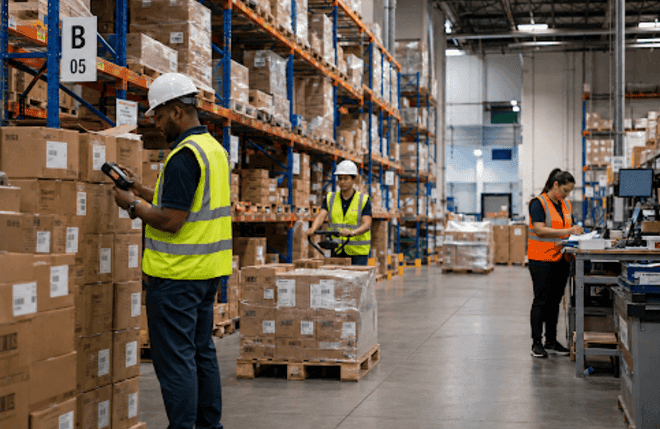
3PL costs for ecommerce brands are the combined fees paid to outsource warehousing, inventory handling, order fulfillment, packaging, shipping support, returns, and related logistics services. A practical 3PL cost breakdown and pricing models comparison usually includes receiving, storage, pick and pack, packaging materials, shipping, returns, account management, technology, and any value-added services. Most ecommerce brands do not pay one universal flat fee because pricing depends on order volume, SKU count, product size, storage needs, packaging complexity, shipping zones, and service requirements.
The most important takeaway is this: the cheapest line item is rarely the cheapest total solution. A low pick fee can be offset by higher storage, shipping markups, receiving charges, or monthly minimums. That is why ecommerce brands should evaluate the total landed fulfillment cost per order, not just a single rate on a 3PL quote. Recent fulfillment pricing guides commonly benchmark pick and pack, storage, receiving, returns, and setup as separate cost categories rather than one blended fee.
What fees are included in a 3PL cost breakdown?
A 3PL cost breakdown usually starts with inbound receiving. This is the cost to unload, count, inspect, label, palletize, or enter inventory into the warehouse management system. Some 3PLs charge by pallet, carton, container, unit, or labor hour. If your inbound shipments arrive without proper labels, packing slips, appointments, or SKU-level organization, receiving costs can increase quickly.
Storage is the next major category. This covers the warehouse space your products occupy before they are sold. Storage may be priced by pallet, bin, shelf, cubic foot, square foot, or a monthly minimum. Slow-moving inventory can make storage expensive, especially if bulky items sit for months. Brands with seasonal products should pay close attention to long-term storage terms and peak-season rules.
Pick and pack fees cover the labor of selecting products from inventory, preparing the order, packing it, and moving it to outbound shipping. Many ecommerce brands pay a base fee for the first item and an additional fee for each extra item in the same order. This is why bundles, kits, multipacks, and subscription boxes can change fulfillment costs. For brands that need assembly, repacking, inserts, or display building, DIY Group’s packaging solutions are especially relevant because packaging complexity directly affects labor and accuracy requirements. DIY Group lists kitting, assembly, labeling, repackaging, shrink wrapping, display building, and other packaging services among its capabilities.
Shipping is often the largest and most variable cost. It depends on package weight, dimensions, carrier, destination zone, speed, residential surcharges, fuel surcharges, and dimensional weight rules. A strong 3PL should help you understand how packaging choices, warehouse location, and carrier selection affect your final shipping cost.
How do common 3PL pricing models work?
The most common 3PL pricing model is transactional pricing. In this model, you pay for each activity: receiving, storage, pick and pack, packaging, shipping, returns, and special projects. It is transparent when the rate card is clear, but it requires careful forecasting because every operational change affects the invoice.
Another model is flat-rate or bundled pricing. A 3PL may offer a single fulfillment rate that includes picking, packing, packaging materials, and sometimes shipping. This can make budgeting easier, but brands should confirm exactly what is included. A “flat” rate may exclude receiving, storage, returns, custom packaging, peak surcharges, or oversized items.
Tiered pricing adjusts rates based on order volume. As monthly order volume increases, the brand may receive lower pick fees or better service pricing. This model can work well for growing ecommerce companies because it rewards scale, but it only helps if your volume consistently reaches the next tier.
Custom pricing is common for brands with unusual products, complex kitting, retail compliance requirements, high SKU counts, or specialized distribution needs. For example, brands that sell through ecommerce and retail channels may need both direct-to-consumer fulfillment and retailer-compliant distribution. DIY Group’s broader 3PL services include warehousing, distribution, ecommerce fulfillment, order progression tracking, and custom packaging solutions, making custom pricing more realistic for brands with multi-step logistics needs.
Why does 3PL pricing vary so much between ecommerce brands?
3PL pricing varies because no two ecommerce operations consume warehouse labor and space the same way. A beauty brand shipping lightweight products in small boxes has a different cost structure than a home goods brand shipping oversized products. A brand with 20 fast-moving SKUs is easier to manage than a brand with 2,000 slow-moving SKUs. The cost difference is not just about volume; it is about operational complexity.
Order profile also matters. Single-item orders are usually faster and cheaper to fulfill than multi-item orders. Fragile products require more packaging care. Products with expiration dates, lot tracking, or quality control standards require tighter processes. Returns-heavy categories such as apparel can carry extra reverse logistics costs because returned items may need inspection, restocking, repackaging, or disposition.
Location has a major impact as well. A centrally located warehouse can reduce shipping zones for many customers, which can lower transit times and outbound shipping expense. DIY Group’s distribution services page notes that its location can reach over 80% of the nation’s population and retail shoppers in one day, while also supporting electronic purchase orders, advanced shipping notices, bills of lading, packing lists, and retailer labeling requirements.
How should ecommerce brands compare 3PL quotes?
Ecommerce brands should compare 3PL quotes by calculating the estimated total cost per order. Start with a realistic monthly order forecast. Include average items per order, average storage footprint, inbound shipment frequency, return rate, packaging requirements, and typical shipping destinations.
A simple formula is:
Total monthly 3PL cost ÷ monthly shipped orders = estimated fulfillment cost per order
For example, if a brand pays $1,200 for storage, $400 for receiving, $3,500 for pick and pack, $800 for packaging materials, $9,000 for shipping, $300 for returns, and $500 in account or technology fees, the total monthly cost is $15,700. If that brand ships 1,000 orders, the estimated 3PL cost per order is $15.70.
When comparing quotes, ask each provider to model the same order profile. Do not compare one provider’s pick fee against another provider’s all-in quote. Ask what happens when order volume doubles, when inventory sits longer than expected, when a product needs kitting, or when peak season arrives. The best comparison shows how pricing behaves under normal, slow, and high-growth scenarios.
What hidden 3PL costs should brands watch for?
Hidden 3PL costs are usually not truly hidden; they are often overlooked in the agreement. Common examples include onboarding fees, system integration fees, monthly minimums, account management fees, extra SKU fees, non-compliant receiving fees, relabeling charges, pallet rework, long-term storage, custom packaging, inventory audits, special projects, and peak-season surcharges.
Returns can also surprise ecommerce brands. A return is not just a package coming back. The 3PL may need to receive the item, inspect it, update inventory, repackage it, restock it, quarantine it, or dispose of it. For brands with a high return rate, reverse logistics should be modeled before signing a contract.
Packaging is another area to review carefully. Standard boxes and mailers may be included in some agreements, while branded packaging, inserts, bundling, display work, or special assembly may be billed separately. Brands that need more than basic fulfillment should review DIY Group’s industry-specific logistics and packaging solutions because ecommerce, retail, CPG, beauty, wellness, automotive, and promotional products often require different handling workflows.
When is a 3PL worth the cost?
A 3PL is worth the cost when outsourcing fulfillment improves speed, accuracy, scalability, customer experience, or management focus more than it increases expense. For many ecommerce brands, the real comparison is not 3PL versus free fulfillment. It is 3PL versus the internal cost of warehouse space, labor, software, packaging materials, carrier management, quality control, returns, and operational distractions.
A brand may be ready for a 3PL when order volume is becoming difficult to manage in-house, shipping errors are increasing, storage space is constrained, retail compliance is becoming more complex, or leadership is spending too much time solving warehouse problems instead of growing sales. DIY Group’s warehousing and fulfillment services include secure storage, automated 3PL warehousing, real-time inventory visibility, RF inventory control, automated conveyor systems, and fulfillment capabilities from a large Midwest facility.
The right 3PL should help protect margins, not just move boxes. That means clear pricing, reliable processes, responsive support, and enough capacity to handle growth without constant operational disruption.
FAQ
What is the biggest cost in 3PL pricing?
Shipping is often the largest cost because it depends on carrier rates, package dimensions, delivery distance, shipping speed, and surcharges. However, storage, pick and pack, and special handling can become major cost drivers depending on the product type and order profile.
Is flat-rate 3PL pricing better than itemized pricing?
Flat-rate pricing is better for simple forecasting, while itemized pricing is better for visibility. The best choice depends on your product complexity, order volume, and need for custom services. Brands should always ask what is included and excluded.
How can ecommerce brands reduce 3PL costs?
Brands can reduce 3PL costs by improving inventory forecasting, reducing slow-moving stock, standardizing packaging, increasing order accuracy, organizing inbound shipments correctly, negotiating volume tiers, and choosing a warehouse location that supports efficient distribution.
What should be included in a 3PL quote?
A complete 3PL quote should include receiving, storage, pick and pack, packaging materials, shipping assumptions, returns, monthly minimums, technology fees, account support, special projects, kitting, onboarding, and any non-compliance fees.
Clear 3PL Pricing Starts With the Real Cost Per Order
A strong 3PL cost breakdown looks beyond the first number on a rate card. Ecommerce brands need to understand how receiving, storage, pick and pack, packaging, shipping, returns, technology, and special services work together to create the real cost per order. The most useful pricing model is not always the cheapest; it is the one that gives your brand predictable costs, operational flexibility, and room to scale.
Before choosing a provider, compare quotes using the same order assumptions and ask how pricing changes as your business grows. A good 3PL partner should help you understand the financial impact of your logistics decisions, not leave you guessing after the invoice arrives.
Why DIY Group is Your Ideal Choice for 3PL Pricing and Fulfillment?
DIY Group is a strong choice for ecommerce brands that need more than basic pick, pack, and ship support. With decades of experience in packaging, warehousing, and distribution, DIY Group understands how fulfillment costs are shaped by labor, storage, packaging complexity, inventory control, and delivery requirements. Its capabilities are especially valuable for brands that need a logistics partner capable of handling ecommerce fulfillment, retail distribution, contract packaging, kitting, assembly, and inventory management under one operational roof.
DIY Group also brings the infrastructure and process discipline that growing brands need when fulfillment becomes more complex. Its Midwest location, large facility footprint, automated warehousing systems, quality procedures, and distribution experience can help brands improve operational consistency while supporting scalable growth. For ecommerce companies trying to understand and control 3PL costs, that combination of capacity, flexibility, and execution matters.
Get a Custom 3PL Quote from DIY Group
Ready to understand what your fulfillment should actually cost? Request a custom quote from DIY Group to discuss your ecommerce fulfillment, warehousing, packaging, and distribution needs with a team that can help build a pricing structure around your real operation.