Angelo Galang

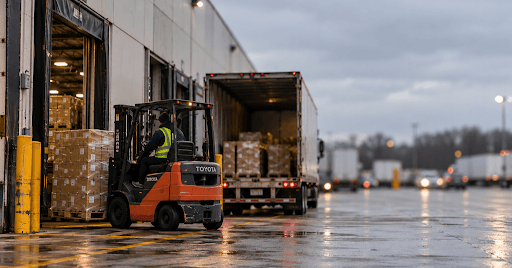
Forklift moving palletized freight at a warehouse loading dock, with trucks blurred in the background.

Cross-Docking Advantages for Midwest Freight Distribution: Costs, Speed, and Efficiency

For Midwest manufacturers and distributors, a pallet waiting in storage can create costs without moving an order closer to delivery. Cross-docking changes that sequence. Incoming freight is checked, sorted, and transferred into outbound shipments with little or no long-term storage. When trucks, labels, and destination assignments are coordinated, the approach can lower storage and handling …

Cross-Docking Advantages for Midwest Freight Distribution: Costs, Speed, and Efficiency Read More »
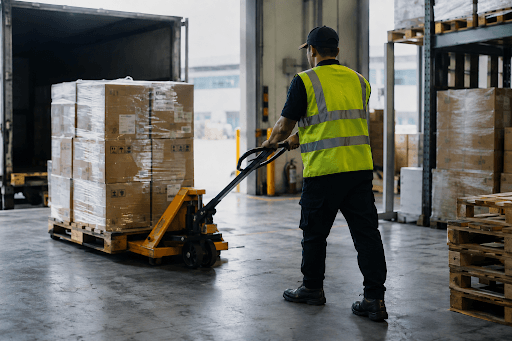
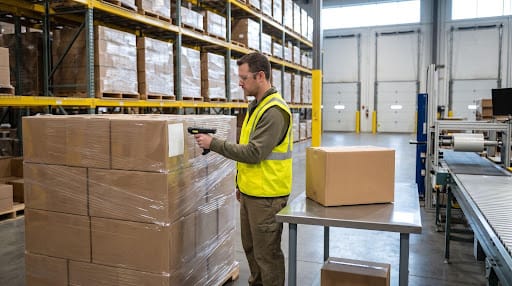
Warehouse worker moving a shrink-wrapped pallet of boxes with a pallet jack toward a loading truck, representing third-party logistics operations and SLA performance.

Third-Party Logistics SLA Metrics to Track Before Performance Slips

  The most useful third party logistics SLA metrics to track do more than tell you whether your 3PL met its obligations last month. They should also help you see where service is beginning to drift before a missed shipment, inventory discrepancy, or fulfillment error reaches your customer. That requires looking at two layers of …

Third-Party Logistics SLA Metrics to Track Before Performance Slips Read More »

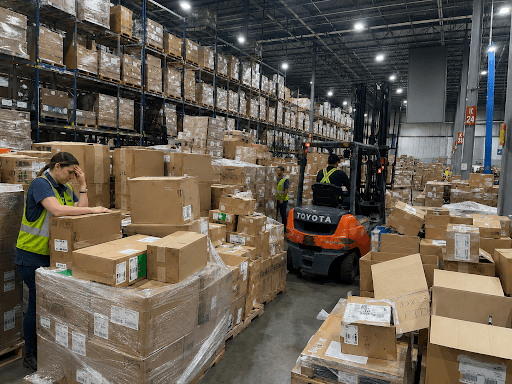
Warehouse workers manage overflowing inventory with stacked boxes, crowded pallets, and a forklift moving through a congested storage aisle.

Inventory Overflow Storage Solutions for Manufacturers Managing Excess Stock

Manufacturers can manage excess stock by moving overflow inventory into a flexible warehousing partner that can store, track, rework, package, and distribute products as demand changes. This prevents production floors, aisles, staging areas, and dock space from becoming crowded while helping manufacturers avoid the cost and delay of permanent facility expansion. The right overflow storage …

Inventory Overflow Storage Solutions for Manufacturers Managing Excess Stock Read More »

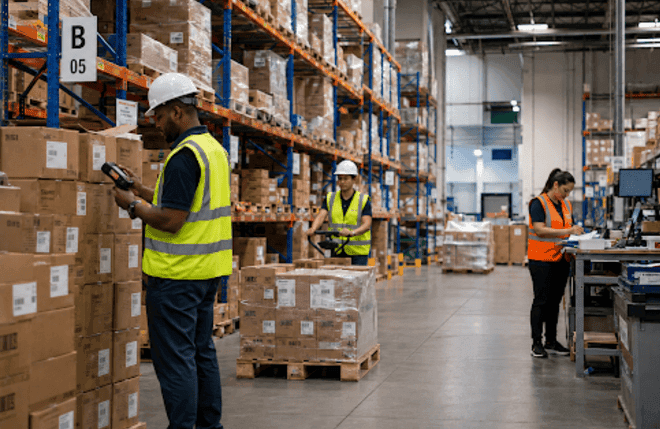
Workers managing inventory and shipments inside a 3PL warehouse facility.

3PL Costs and Pricing Models for Ecommerce Brands

3PL costs for ecommerce brands are the combined fees paid to outsource warehousing, inventory handling, order fulfillment, packaging, shipping support, returns, and related logistics services. A practical 3PL cost breakdown and pricing models comparison usually includes receiving, storage, pick and pack, packaging materials, shipping, returns, account management, technology, and any value-added services. Most ecommerce brands …

3PL Costs and Pricing Models for Ecommerce Brands Read More »

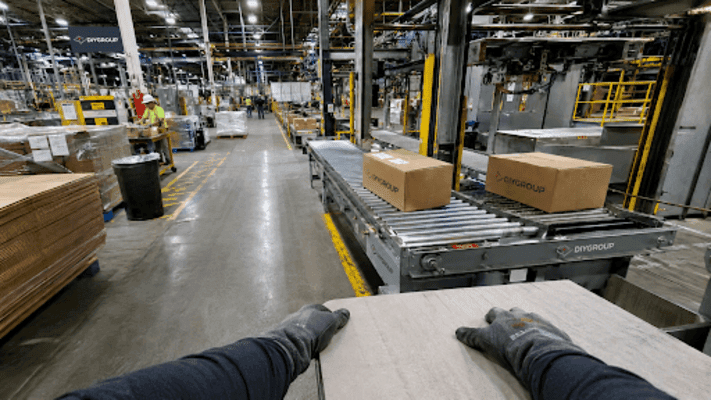
DIY Group retail packaging facility with labeled cartons moving along a conveyor for vendor-compliant packaging and distribution.

Retail Vendor Compliance Guidelines for Packaging: What Suppliers Need to Know Before the Next PO Ships

Retail packaging is no longer just about protecting a product. For suppliers, it is a compliance checkpoint that can affect chargebacks, delivery speed, buyer relationships, and long-term retail growth. The strongest retail vendor compliance guidelines for packaging help suppliers prepare cartons, pallets, labels, documentation, and shipment data in a way that matches each retailer’s routing …

Retail Vendor Compliance Guidelines for Packaging: What Suppliers Need to Know Before the Next PO Ships Read More »

Scroll to Top